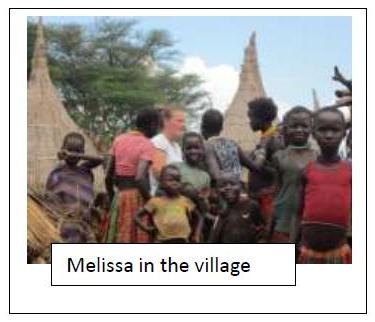
Twenty minutes before the sun raises its tenacious head above the horizon a rooster warns the world of its
coming. A new day is breaking forth, the rhythms of life set in motion once again. Each new day is
slightly mysterious, yet cushioned by the daily tasks that must
be accomplished, keeping a tedious balance between the
mundane and chaotic. As the sun climbs slowly into the
morning sky, the village wakes up around us. Women begin
making fires for morning porridge, shepherd boys begin
singing to their cows, waking them up and preparing them for
the day’s journey to graze. Girls giggle as they get dressed,
sweep the compounds and begin to walk to the nearest bore
hole to gather water. Soon the air is filled with chatter and
squeaking as women pump water from over-used bore holes.
Andrea, the guard, slashes grass on the compound; his blade
grazes the ground as he attempts to keep snakes and other
pesky critters away. A multitude of birds sing through the air, happily chaotic in their celebration of the
new day.
By the time the sun reaches through the window in my round rock house many of the villagers have been
up for an hour or so before me. I have been listening to the slow awakening around me, but without
electricity to brighten the house my motivation to wake up earlier is limited. I went to bed with the light
of a flashlight, I would rather wake with the natural light of the sun.
I love the ease with which I can get ready for the day here- pull on a skirt, slather on some sunscreen, add
some beads if I’m really feeling fancy and out the door I go. I haven’t looked at myself in a mirror for
over a week- freedom. The opinions of others is already confused by the color of my skin, so what does it
matter if I hold to the western standard of beauty?

The first order of the day is to make a charcoal fire. We splinter eucalyptus
wood into small pieces and burry it in the middle of the sigari (charcoal
burner). Once it flares to life, we build a charcoal wall around it heating as
many pieces as possible. The smell of smoke is seared into my clothing
and hair as I fan the fame to get it red-hot for cooking. If possible, I will
keep the charcoal burning all morning. I will start by cooking porridge for
breakfast, followed by boiling water for drinking, and then other baking
projects (bread can take four hours on the coals). I enjoy experimenting
with cooking projects and have found that you can cook a great deal with
limited ingredients and no oven.

Personal devotions are enjoyed over a cup of morning coffee and porridge. This is
one of the sweetest moments of the day, before the demands come, before language
lessons start, before you have to do anything, you can just be. Be with the Lord. Rest
in His life-giving words. Journaling prayers, intimate communication with the Savior
of my soul. Dealing with heart issues, crying out to Him for direction, for wisdom, for grace. Precious
moments with the Lord are never wasted.
I would love to linger there longer, but the day presses forward and so I must join it. Melissa and I pray
together and go over the schedule for the day. The routines that give us daily structures are unique,
unknown to the rest of the world, protected from the pushing and shoving of the western world, free from
the clock that governs the schedules of others. We will clean the compound, do language lessons, help
KACHEP with whatever they need (animal health, trainings, spraying events etc.), go out to the villages,
share the Word of God through storying, cook food, and when the sun goes down we will entertain
ourselves through book studies, conversations, worship, pod-casts or movies. It is simple. But it is
consuming.

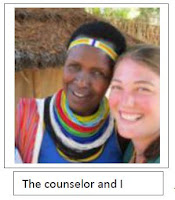
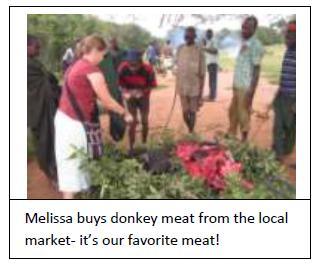
There are times when I wonder what I accomplished that day- I walked
to the market. On the way I greeted the tailor, I spoke with Mama
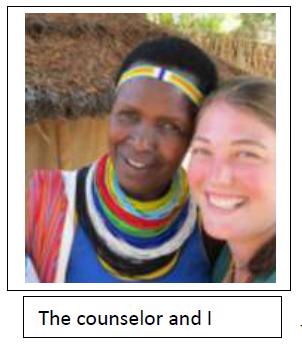
Sarah, stopped by the counselor’s
house, shook hands with about fifty
people, denied that same number of
people the money that they begged
from me, chatted with the store clerk,
bought my kilo of sugar, my four
tomatoes and five onions (all in
different locations), amicably argued
with the woman over charcoal prices, fought off two marriage proposals
and came home. A trip to the market is not really about the kilo of sugar, the four tomatoes and the five
onions. It is about community. It is about building relationships. It cannot be factored into a time-oriented
society. It just is. And somehow, in the eternal perspective of the Lord, it has value.
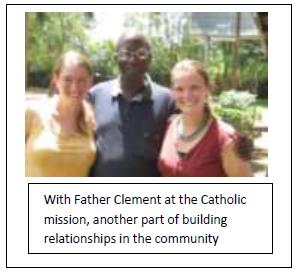
If I get caught up in the events, the goals of life (i.e. the quantifiable
accomplishments of organizations), I rush over the people, I miss the
bigger scheme of community, of relationships, of participating in life
with God’s beloved. I miss the joy that I see on their faces when I
learn a new word and use it correctly, I miss knowing that the
counselor is sick and needs prayer, I miss bringing a smile to the
woman who sells tomatoes, I miss life in Karamoja. So I must change
from being task-oriented to people-oriented. And in that change, I
must remember that it is through these relationships that the kingdom
of God can be known. It is through our love and the way that we live
our lives that people first experience the presence of God. It is through these relationships that we have
the platform to speak God’s truths. And we do need to speak them, because faith comes through hearing
and hearing from the Word of God (Rom. 10). So in the schedule of the day, I must carve out time for
people, for trips to the market that take an hour.
As evening gives way to night, I make another charcoal fire to cook dinner. The crickets and frogs join in
the last chorus of the day and the sun rests once again beyond the horizon. Bright stars splash against the
dark sky with awe-inspiring radiance. The village to the east starts a late celebration, dancing and singing
with unity and power which echoes over the land. The village to the west sounds an alarm as raiders come
in to steal their livestock. Gunshots can be heard as the army comes to intervene. Melissa and I hear these
sounds from afar and pray for the villages. Pray that one day the sounds rising from the villages will be
that of worship and praise, of celebration in the work that God will do in their lives.

Until that day comes we will continue to live here, faithfully asking
God to fill our days with the works and the relationships that He wants
us to have; submitting our schedules to God that He may be glorified
in the smallest, most inconsequential act to the biggest, most exciting
events. God is worthy of it all and He is always at work, even when
we don’t see it.
Please pray that God will guide us with His love and wisdom, that we
would have grace for each day that He gives us here. Pray that we
would value each day and life it to the utmost for His glory and honor, and that each day we live in
Karamoja the people would recognize the presence of God in our lives.
Much love,
Summer


 There are times when I wonder what I accomplished that day- I walked
to the market. On the way I greeted the tailor, I spoke with Mama
Sarah, stopped by the counselor’s
house, shook hands with about fifty
people, denied that same number of
people the money that they begged
from me, chatted with the store clerk,
bought my kilo of sugar, my four
tomatoes and five onions (all in
different locations), amicably argued
with the woman over charcoal prices, fought off two marriage proposals
and came home. A trip to the market is not really about the kilo of sugar, the four tomatoes and the five
onions. It is about community. It is about building relationships. It cannot be factored into a time-oriented
society. It just is. And somehow, in the eternal perspective of the Lord, it has value.
There are times when I wonder what I accomplished that day- I walked
to the market. On the way I greeted the tailor, I spoke with Mama
Sarah, stopped by the counselor’s
house, shook hands with about fifty
people, denied that same number of
people the money that they begged
from me, chatted with the store clerk,
bought my kilo of sugar, my four
tomatoes and five onions (all in
different locations), amicably argued
with the woman over charcoal prices, fought off two marriage proposals
and came home. A trip to the market is not really about the kilo of sugar, the four tomatoes and the five
onions. It is about community. It is about building relationships. It cannot be factored into a time-oriented
society. It just is. And somehow, in the eternal perspective of the Lord, it has value.