JT Grade DVM, PhD
Uganda: +256-758 899777
USA: +1-415 858 4262
Belgium: +32-488 94449

Showing posts with label Culture. Show all posts

Saturday, September 21, 2013

Livelihood Dynamics in Northern Karamoja

A Participatory Baseline Study for the Growth Health and Governance Program

By John Burns, Gezu Bekele, and Darlington Akabwai

This report documents the findings of a livelihoods assessment carried out as part of the USAID funded Growth, Health and Governance program being implemented by Mercy Corps and partners in the Karamoja sub-region of Northeastern Uganda. The assessment is one component of a broader research and learning agenda involving a set of livelihoods, impact and gender studies. The research is being led by the Feinstein International Center with the overall objective of informing the design and implementation of program interventions and assessing impact.
The study was conducted during the first quarter of 2013 in seven markets and thirty-one villages in Abim, Kaabong and Kotido districts. Focus groups were carried out in all villages using semi-structured interviews complemented by participatory exercises including community mapping, timelines and ranking and scoring exercises. The study also included a number of visits to market centers as well as key informant interviews.
The study set out to identify the major opportunities and constraints to production and marketing in the study area and to investigate what productive resources are currently available and how these are being utilized. The assessment also set out to investigate recent events and longer-term trends with the objective of understanding how these might have an impact on production and livelihoods. The study also looked at the current utilization of different products and services from the perspective of program participants. This was done to assess the availability, accessibility and quality of existing services both to inform programming and to establish a service delivery baseline against which to measure impact against. The study also set out to investigate perceptions of poverty and inequality and to quantify the proportion of study participants belonging to different wealth categories. This was primarily done to enable changes in relative wealth to be captured as a proxy for project impact during future assessments.

read Report

Tuesday, December 4, 2012

Update Melissa

John Chapter 3

Tuesday 20th November 

Today we had our last village bible studies with 2 villages they call Okutoot and Napana. Okutoot have had a relationship with KACHEP for about 2 years now but with Napana we have only just started visiting and getting to know them since the beginning of October this year. One of their biggest struggles is the distance they are from a church. They are about 20 km give or take from the closest two towns which is quite a long way to walk every Sunday! So one day when they saw us driving from Okutoot and asked us what we were doing, they asked us if we could come lead a Bible study in their village so they could have church every week too. At the beginning of our time with them, we found that there was only three strong Christians in Napana, but the majority of the people had no idea what Jesus was all about, especially the men. After the first couple of weeks as we told Bible stories, the men sadly stopped coming. A large group of women, teenagers and children kept coming however.

We took them through what is called chronological Bible storying, telling Bible stories from Creation and the Fall in Genesis, to the birth of Jesus and the gospel message of life through faith in Jesus' death and resurrection. This spans most of the Bible, leaving them with a good understanding of what Christians believe and the Good news that we are not, nor were we ever, alone here. 

So this week, our last week, I told the story of a man called Nicodemus and his interaction with Jesus, back around 30 AD, found in John Chapter 3. By God's grace, after the story and some discussion about the story and talking through what being a Christian means, 20 plus people gave their lives to Christ today. I was so grateful for Joshua, our translator and his heart for evangelism and wanting his people to understand the truth of Jesus. He translated, but interactively, making sure everyone understood what we were saying to them.


In this story it talks of 'the Kingdom of God' which is another way of saying Heaven, the place where we will be with God and where there is only his love. All sorrow and pain are wiped away. According to the Son of God, there is only one way to enter this kingdom, to be 'born again', through believing in Him and what He has done for the whole world on the cross. To Nicodemus, this was as confusing as it is to the next person when they hear such a concept for the first time. "How can we be born again? Can we jump back into our Mother's womb?" Nicodemus asks. Jesus means that to be his followers, there has to be a life change, we cannot keep living the way we are naturally inclined to and we cannot worship the things we did before. It has to be like we are literally starting over, hence the 'born again'. Anyone can say they will follow Jesus yet continue to live their life as if they don't. In 2 Corinthians 5:17 it says, "If anyone belongs to Christ, there is a new creation. The old things have gone; everything is made new." We are to turn our back on things like selfishness, greed & anger, and strive for those of love, kindness, generosity, etc. For the human race, you and I, this is easier said than done, and it takes a daily commitment and re-commitment as we live our lives, born again as new creations.

Mercy triumphs over judgement = "If we claim to be without sin, we deceive ourselves and the truth is not in us. If we confess our sins, He (Jesus Christ) is faithful and just and will forgive us our sins and purify us from all unrighteousness. If we claim we have not sinned, we make him out to be a liar and his Word is not in us. I write this to you so that you will not sin. But if anybody does sin, we have an advocate with the Father - Jesus Christ, the Righteous One. He is the atoning sacrifice for our sins, and not only ours but also for the sins of the whole world."         1 John 1:8-2:1-2

The people of Napana decided to make this informed choice today after meeting with them for 7 weeks now. They were told that it is a relationship, not an obligatory religion and something to fall out of because it is too hard. It is grace. We will do wrong things, Jesus knows that, that is why He, and not us,  had to pay the price for our sins, and he forgives us when we truly want to change.

Pray for them that they would continue on this narrow road of salvation, confessing where they stumble, rejoicing in the knowledge that they are forgiven, submitting their actions and decisions to Christ and trusting in him for everything.

Praise God for his awesomeness!!!!!!!
Melissa

Saturday, October 27, 2012

A Day in Karamoja


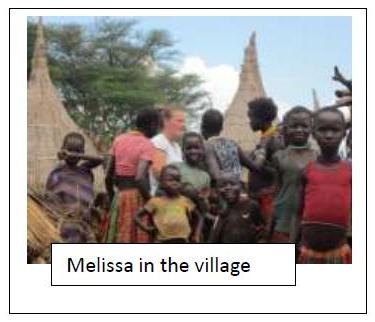
Twenty minutes before the sun raises its tenacious head above the horizon a rooster warns the world of its coming. A new day is breaking forth, the rhythms of life set in motion once again. Each new day is slightly mysterious, yet cushioned by the daily tasks that must be accomplished, keeping a tedious balance between the mundane and chaotic. As the sun climbs slowly into the morning sky, the village wakes up around us. Women begin making fires for morning porridge, shepherd boys begin singing to their cows, waking them up and preparing them for the day’s journey to graze. Girls giggle as they get dressed, sweep the compounds and begin to walk to the nearest bore hole to gather water. Soon the air is filled with chatter and squeaking as women pump water from over-used bore holes. Andrea, the guard, slashes grass on the compound; his blade grazes the ground as he attempts to keep snakes and other pesky critters away. A multitude of birds sing through the air, happily chaotic in their celebration of the new day.

By the time the sun reaches through the window in my round rock house many of the villagers have been up for an hour or so before me. I have been listening to the slow awakening around me, but without electricity to brighten the house my motivation to wake up earlier is limited. I went to bed with the light of a flashlight, I would rather wake with the natural light of the sun.

I love the ease with which I can get ready for the day here- pull on a skirt, slather on some sunscreen, add some beads if I’m really feeling fancy and out the door I go. I haven’t looked at myself in a mirror for over a week- freedom. The opinions of others is already confused by the color of my skin, so what does it matter if I hold to the western standard of beauty?

The first order of the day is to make a charcoal fire. We splinter eucalyptus wood into small pieces and burry it in the middle of the sigari (charcoal burner). Once it flares to life, we build a charcoal wall around it heating as many pieces as possible. The smell of smoke is seared into my clothing and hair as I fan the fame to get it red-hot for cooking. If possible, I will keep the charcoal burning all morning. I will start by cooking porridge for breakfast, followed by boiling water for drinking, and then other baking projects (bread can take four hours on the coals). I enjoy experimenting with cooking projects and have found that you can cook a great deal with limited ingredients and no oven.

Personal devotions are enjoyed over a cup of morning coffee and porridge. This is one of the sweetest moments of the day, before the demands come, before language lessons start, before you have to do anything, you can just be. Be with the Lord. Rest in His life-giving words. Journaling prayers, intimate communication with the Savior of my soul. Dealing with heart issues, crying out to Him for direction, for wisdom, for grace. Precious moments with the Lord are never wasted.

I would love to linger there longer, but the day presses forward and so I must join it. Melissa and I pray together and go over the schedule for the day. The routines that give us daily structures are unique, unknown to the rest of the world, protected from the pushing and shoving of the western world, free from the clock that governs the schedules of others. We will clean the compound, do language lessons, help KACHEP with whatever they need (animal health, trainings, spraying events etc.), go out to the villages, share the Word of God through storying, cook food, and when the sun goes down we will entertain ourselves through book studies, conversations, worship, pod-casts or movies. It is simple. But it is consuming.

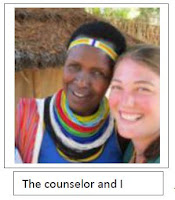
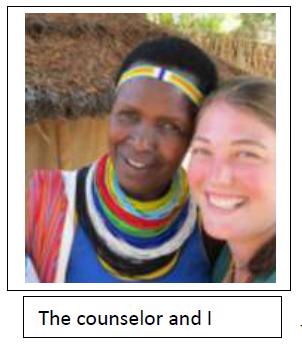
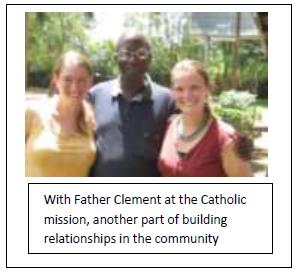
There are times when I wonder what I accomplished that day- I walked to the market. On the way I greeted the tailor, I spoke with Mama Sarah, stopped by the counselor’s house, shook hands with about fifty people, denied that same number of people the money that they begged from me, chatted with the store clerk, bought my kilo of sugar, my four tomatoes and five onions (all in different locations), amicably argued with the woman over charcoal prices, fought off two marriage proposals and came home. A trip to the market is not really about the kilo of sugar, the four tomatoes and the five onions. It is about community. It is about building relationships. It cannot be factored into a time-oriented society. It just is. And somehow, in the eternal perspective of the Lord, it has value.
If I get caught up in the events, the goals of life (i.e. the quantifiable accomplishments of organizations), I rush over the people, I miss the bigger scheme of community, of relationships, of participating in life with God’s beloved. I miss the joy that I see on their faces when I learn a new word and use it correctly, I miss knowing that the counselor is sick and needs prayer, I miss bringing a smile to the woman who sells tomatoes, I miss life in Karamoja. So I must change from being task-oriented to people-oriented. And in that change, I must remember that it is through these relationships that the kingdom of God can be known. It is through our love and the way that we live our lives that people first experience the presence of God. It is through these relationships that we have the platform to speak God’s truths. And we do need to speak them, because faith comes through hearing and hearing from the Word of God (Rom. 10). So in the schedule of the day, I must carve out time for people, for trips to the market that take an hour.

As evening gives way to night, I make another charcoal fire to cook dinner. The crickets and frogs join in the last chorus of the day and the sun rests once again beyond the horizon. Bright stars splash against the dark sky with awe-inspiring radiance. The village to the east starts a late celebration, dancing and singing with unity and power which echoes over the land. The village to the west sounds an alarm as raiders come in to steal their livestock. Gunshots can be heard as the army comes to intervene. Melissa and I hear these sounds from afar and pray for the villages. Pray that one day the sounds rising from the villages will be that of worship and praise, of celebration in the work that God will do in their lives.

Until that day comes we will continue to live here, faithfully asking God to fill our days with the works and the relationships that He wants us to have; submitting our schedules to God that He may be glorified in the smallest, most inconsequential act to the biggest, most exciting events. God is worthy of it all and He is always at work, even when we don’t see it.

Please pray that God will guide us with His love and wisdom, that we would have grace for each day that He gives us here. Pray that we would value each day and life it to the utmost for His glory and honor, and that each day we live in Karamoja the people would recognize the presence of God in our lives.

Much love,
Summer

Wednesday, July 18, 2012

Melissa Graham

15th July 2012 Prayer Points

Please be praying for Summer and I as we head back to Karamoja for:

            - safe passage and fair roads

             - solid learning as we visit the OPC missionaries again on Monday and spend the day learning the ins and outs of our wonderful 4WD vehicle from Bob the amazing handyman mechanic there.
            - me as I work with 10 women from the community next week to revive ethnoveterinary medicine in KACHEP starting with Neem oil production. Wisdom to make this project sustainable and something the community can take on themselves and benefit from with the eventual aim of not needing KACHEP to fund them in it.

            - opportunities to speak truth and light into our community and where God places us every step of the way, continued storying and bible study groups; that God would open the doors for us to spend more time in the manyatas/villages than we have been.

           - praise and glory to God for our Thursday Bible study with all the KACHEP members, that it is going really well and that as we read the Bible together in English and Karamajong, the Word is speaking into the lives of everyone who comes and is clearly growing them in their faith and knowledge of our great God and Saviour.

            - the growing friendships between us and the Karamojan people of Nabilatuk

             - Miriam, as she heads back to Germany and for wisdom and guidance and fun times with friends and family as she finishes her studies there.

             - Alyce and the blessing she was and the fun we had together (love you sis)

            - Tom and Jean in America

            - partnerships with new friends at OPC and CLIDE (Dr Val)

             - raising up new team members for the harvest of Karamoja

             - praise and immense gratitude for everyone here in Uganda supporting us and for everyone overseas supporting us; Calvary Chapel, esp. Bev and Jesse Rich, CVM, esp. Fred Van Gorkom, Pioneers International, Unichurch (Wagga Wagga) and our friends and families.

Alyce in Karamoja

14 July 2012
Last week my sister Alyce came to visit us in Nabilatuk! I want to thank her for being an amazing help and blessing to me and to the team. She arrived to find Summer and Miriam malaria stricken and most of KACHEP out or sick too. It was such a crazy week with so many fun things that happened!

I had just spent the week with Dr Val and upon hearing that my beloved teammates were practically dying in Nabilatuk and so probably wouldn't make it to come get us, Val and I went and picked Alyce up (Mon 2nd) from the small airstrip in Moroto where she was flying into. So 2 hours from Nabilatuk and not sure how we're going to get back there, we hear that Miriam had driven up to a hospital near us to get tested for malaria and bruscellosis. So we spent the morning in Moroto, Alyce did some souvenir shopping and we had lunch while we waited to get another update of the situation. Miriam came to Moroto, picked us up and somehow we arrived safely in Nabilatuk later that afternoon.

Miriam's malaria count was 180. People have malaria at anything higher than zero. People feel sick and unable to get out of bed at a count of 4. Miriam had 180 and drove 240 km that day, she shouldn't have been walking or talking let alone driving. Hmm the things you discover after the fact.

The day after, Miriam was on an intravenous drip with malaria medication and fluids for extreme dehydration, rotated for three days. On the second night the IV line came out and when she went back to the clinic to get it put back in, the nurse had to jab her in about 10 different places because her main veins had mostly all collapsed. It was a scary time for all of us, especially Summer and I in fear for her, let's put it that way.

So Alyce came in perfect timing and we were still able to spend quality time together despite the crazy circumstances.
Alyce came bearing gifts. I've got a licorice allsort in my mouth.
(in case you were wondering)
 Wednesday was, for all who are American or who have ever watched an American TV show would know, 4th of July, aka Independence Day. Alyce and I tried to make the day as special as we could for Summer. We have of course never celebrated the day so didn't really know what to do but we still had fun. Together the three of us (between checking on Miriam) drew an American flag (50 stars & 13 stripes and all!), made garlic bread and pizza for dinner and cinnamon rolls and a peach pie for dessert (which took most of the afternoon to do as all we have in the way of a kitchen here is a small fire), had fun singing national anthems together, Summer sung hers very passionately and played cards (4 corners, which became a game Alyce loved to play but never won until the last day she was here :). 
Summer, Alyce and I making the American flag

Alyce's swishy skirt.
On Friday we started a project that we'd been wanting to do for a while but was catalysed by the fact that we wanted to share it with Alyce who would be leaving the following Wednesday and Miriam who would be leaving the following weekend. So we got together with our Karamojan girls (Nabor, Valentina and Christine) and we all sewed traditional K'jong skirts! See photos :) We bought 7 large cloths of blanket-like material all of different patterns to make 7 skirts for us all. Working together we cut the blanket in rectangle panels and sat down and made 7 skirts that had 14 panels in each, all completed in a day! It was sooooo much fun! We are officially Karamajong now with our swishy skirts :) The best part about it was seeing Valentina, Nabor and Christine really get into it as well. They were just as excited, if not more excited about the whole thing!

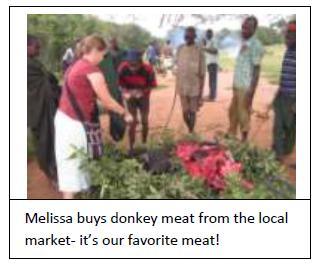
This is me choosing the best cuts of donkey meat for dinner.
On Saturday we went to a local market and bought donkey meat for dinner. We were planning to go out to a nearby mountain and have a picnic under the great expanse of K'jong stars but then Miriam (who was on the mend by this stage) got a message inviting us to another 4th of July celebration (only it was the 7th of July) with some missionaries from America with the Presbyterian church who live about an hour away. From now on I will refer to them as the OPC missionaries for convenience :)

Our cooking stove.
So change of plans! We took our donkey meat with us but they had prepared hotdogs, so there was plenty of food to go around :)
Sunday was another crazy fun out of the blue opportunity in which Summer, Alyce and I went to a prison in Namalu, about 1hr from Nabilatuk. I gave my testimony of how Jesus has changed my life and Summer spoke about Zacchaeus the tax collector and how, although he was a thief,  he was forgiven when he made the choice to change his life and give back what he had stolen, asking Jesus for forgiveness, (Luke 19:1-10) "For the Son of Man came to seek and save the lost." I won't mention that we didn't get home til around 9:30pm because we put petrol in our diesel land cruiser and then had to empty and replace it all again. Fun times!!
On Tuesday the three of us went to a local primary school and we were warmly welcomed with a song from the students with bongo drums and impressive harmonies. Alyce is a primary school teacher at home and so had brought 200 pencils that the students from her school had donated to give to this Karamajong school. We spent some time with the whole school (around 200 students) in their assembly and then we went into a classroom that had 20 kids of equivalent grading to Alyce's Australian students.
 Alyce's students had all drawn pictures for these children and wrote a few sentences about themselves. Alyce had taken photos of each of her students and attached them to the drawings so the K'jong could see their Australian student counterparts. It was nice to see their faces devouring these photos of fair, blonde haired, blue eyed children and read about their families and pets and favourite sports. We got the kids to write messages back to the Aussies with things like, My name is..., I have... people in my family, In my garden is... (all the children will have family gardens they work in with maize or sorghum or beans in them, etc.), at home we have...animals, etc. Then they also drew drawings and we took photos of them with their pictures. It was really fun to have such a reciprocal activity and I can't wait to hear what Alyce's Australian students say when they see cute Karamojan children holding up the drawings they have drawn! It'll probably blow their minds to think of their drawings all the way in Africa!

Tuesday night we had a massive party together with the KACHEP members and the four of us singing and dancing.
 We were not really celebrating but commemorating Miriam for her time serving in Karamoja and also saying goodbye to Alyce as well, as she flew out the following morning. I'm not going to lie, I cried when she left; having family visit you in such a place as Karamoja gives you a teasing taste of home that is both wonderful and horribly sad when the time comes to an end.

For a short time we were four! Now as I write this I am down country in Jinja and when we return to Karamoja tomorrow (Sunday), we will be two.

Tuesday, July 17, 2012

Melissa Graham 2. July

Meeting new people and just having fun.


18 June to 02 July 2012

I spent this week in Kangole, (Payak District) Karamoja, two hours from Nabilatuk. I spent it with a Vet,  yay!!! It was an awesome opportunity to learn from another CVM missionary who has been around the traps (to say the least) and about what she does here.

Dr Val has seen Karamoja at it's worse, seen Uganda at it's scariest and saddest. Seen it at it's best and been here long enough to have made it her home and to be welcomed by the locals as if it is her home.


She has worked hard to bring peace between warring tribes, bringing a start to poverty alleviation in her community by joining with the people and joining with the church here to partner with what God is already doing.

They strive to equip and empower the cattle people and tribe leaders in effective animal health training and how they can combine improving the health of their livestock, with poverty alleviation for themselves and their communities.

Training select Karamajong to be trainers and train in this way; even passing on the knowledge to pass on knowledge.

In this way the ministry continues without her needing to be everywhere, all the time, so that it is sustainable and avoids creating dependency.

The animal health workers are in an extensive training program, with record keeping of their progress and to keep them accountable of their work as a business. They can treat the common diseases for their communities and when there is a difficult disease case she is there to advise and consult. They are encouraged and empowered to work for themselves without having to relying on NGOs or begging, to survive.

In her past 15 or so years here, Dr Val has learnt all she knows about the local medicines, from the elders of clans and tribes who have been using this traditional medicine all their lives. She had researched the medicinal properties of these plants and researched the research done on these medicines. Together with the local people, the organisation turns the 'crude' forms of the medicines used by the locals into the most effective products they can be. Again, the aim is to give this knowledge over to the local people to own and reap benefits from. It is not about her or the organisation. It is about helping make what is already being used to be the most beneficial for the people that were already using it to begin with. Also, protecting their ownership of it, the intellecual property of the K'jong and enabling the production and sale of the medicines even on an international scale.
So the animal health workers use this medicine as well as incorporating western medicines such as penicillin streptomycin, etc. to treat sick animals in their communities.

While I was with the group there I also learnt the importance of not doing things for people which they can do for themselves. It sounds obvious but there is the real temptation to come in and run the show or assume that it could be done in a better way. The goal should always be joining with the people, allowing them to be participants and also realising the amount that we can learn from them about their own lives, in communities that are in deep poverty.

Other things of the week included

            - making paper beads with HIV affected people in a church group. (microenterprise project)

            - agroforestry (working that hoe)

- visiting local kraals.

(cattle communities of 5000+ cows guarded by the Ugandan army)

- learning more of the history of Karamajong from new K'jong friends and how raiding began

            - black stone making (medicine for snake bites)

            - animal treatments (see photos)

            - Travelling to the community called Iriri, discussing an upcoming brucellosis and edepal research trial with the locals. Edepal or Prickly Pear increases milk production in animals and is also known to be a treatment for diabetes.

            - Learning about the peace communities between the piyan (the Nabilituk tribe) and bukora (the tribe here in Kangole, Payak).

            - Attending the local Anglican church service, very fun and vibrant :)

            - Climbing Mt Heart and battling through really painful burr grass sticking to my socks and scratching up my legs.

A fun week :)

My sister Alyce is coming to visit next week!!!


Friday, December 16, 2011

Turkana

Climate change in Turkana

Turkana people are basically the Karamojong of Kenya
 
Lake Turkana, Kenya (CNN) -- Richard Leakey has spent a lifetime exploring Kenya's Turkana Basin searching for the origins of man.
Each layer of sediment, says the paleoanthropologist and founder of the Turkana Basin Institute, helps to tell the narrative of human evolution.
"You get the whole story of life represented going back from the present right back to the beginnings of an ape that has two legs as opposed to four," Leakey said.
"So the whole story of humanity you can actually trace to the Turkana Basin."
But Leakey says these ancient hills tell another story, a history of climactic changes that gave rise to some species and led to the extinction of others.
 

Saturday, December 10, 2011

KARIMOJONG

Its interesting how they name the month:

ENGLISH

KARIMOJONG

THEIR MEANINGS

January

Lokwang

No activity because it’s so hot the sunshine is at its peak.

February

Lodunge

When this month comes to the end, it’s the end of bad season(End of drought)

March

Lomaruk

The beginning of cultivation & harvesting mushrooms that is where this month gets the name lomaruk meaning mushrooms.

April

Titima (locoto)

This is the sorghum is grown to about one feet. Some people are weeding and it’s the same month called locoto meaning mud. Some people are still digging / plaughing. There is rain and a lot of mud.

May

Yeliyel

Crops are flowering mostly sorghum / maize and some weeding of beans / G.nuts is taking place (but the word comes from flowering)

June

Lomodokogec

The mingling sticks are stained with fresh food and that means satisfaction (it’s the time people are eating fresh food).

July

Losuban

A lot of parties, beliefs are celebrated.

August

Lotyak

Cutting or harvesting rids for building granaries and houses.

September

Lolobae

This is when antelopes are breeding and we have enough of them. Sorghum is also still in the garden with same colors like the antelopes.

October

Lopoo (Akilem)

Meaning the seasons of harvesting crops from the garden.

November

Lorara(Akiram)

Means threshing and winnowing. (saubermachen)

December

Lomuk

Means threshing and winnowing. (saubermachen)         


Places

People

Meaning

Kabong

Dodoth

Meaning York (Egg York)

Kotido

Jie

Meaning fighter

Nabilatuk

Pian
Breaking of cows. I think when these people were occupying this place most of their cows would get broken, may be because of hunger or other things.
 Pian Mean people with easy hearts an. With low tempers. 

Saturday, December 3, 2011

Team Retreat

Picture of our team retreat
Joshua, Dr Jean, Tom, Mukisa,  Christine (holding her 4th born -
Ilokul -2nd daughter, Teko standing in front) and Mr. Loumo 


Thursday, November 24, 2011

It's early morning in Okotoot

from Jean on 22.11:
We arrived yesterday and found the village all ready and expectant for their Tuesday story night. Joshua led singing because Valentina was back home in her village with a sick child- the same one that had been in the cattle raid a few months ago. Tom and Joshua tag teamed the David and Goliath story and the shepherd boys loved it. I felt at home sitting under a glorious starry night around a small campfire hearing the mingling of my mother tongue with ngakarimojong filling me with peace and expectation of our real home, were every tongue and tribe will sing His glory.

The moon is tiny these days, roosters are busy greeting the still dark sky- while next to me and my cow skin bed mat; my roommate Akol is churning our morning yoghurt in a large gourd suspended from the hut rafters by leather straps. A new day in the life. 
We'll be busy this morning running cattle thru the chute, spraying against ticks. I'll spend time with Moru Anna and do some building of a new hen house.

Sunday, November 6, 2011

PI Uganda Retreat - Kingfisher, Jinja - Nov 2011

This weekend we are in Kingfisher for our Pioneers Uganda, missing Miriam on this.....

Saturday, October 8, 2011

"So, what do you want from us?"

This question came from a Ng'atom church leader after a couple of days of . well, not grilling exactly, but some intensive questioning on their strategy of evangelistic outreach. The Ng'atom are on both sides of the Sudan-Ethiopian border and are, together with the Toposa of southern Sudan and the Turkana of northern Kenya, part of the Karamojong cluster.
Good question, I thought. OOOPS! You mean no one told you? So I said (out loud): "over a year ago, Trent and I spoke at length about the vision God's been giving each of us." (Trent Cox is another CVM missionary, partnering with SIM in Ethiopia.) "He wants to send missionaries - not muzungu/ferengi
missionaries but Ng'atom - across to Uganda. I want to train Karamojong to be missionaries reaching all the way across to Ethiopia."  What I didn't say out loud was, "I WANT RED-MEAT-EATING CHURCH PLANTERS WHO WILL GRAB THE KINGDOM OF DARKNESS BY THE THROAT AND SHAKE IT UNTIL ITS DEAD TEETH RATTLE
LOOSE IN ITS BONY HEAD! AAAAAARRRR - ARE YE WITH ME, BOYS??!!" It might have
lost something in the translation. Our translator was James, a Toposa pastor from Kapoeta, south Sudan, speaking to Ng'atom of Sudan & Ethiopia, and conversing with Jean and Martha (a Presbyterian colleague who lives near us) who use Ng'Karimojong. Nice, eh?! One of the by-products of SIL's meeting of pastoralists from the cluster was this confirmation of the member's linguistic proximity to one another. This is also yet another reminder (as if we needed another reminder) that we must make progress in language study. Learning Ng'Karamojong will open up not only the whole of Karamoja but at least three other language groups across three other nations covering more than a million lost pastoralists ("lost"? But I knew where I was the whole time - you know what
I mean). Speaking of which, I've made some progress. I was able to hear some of the conversations around me and (drum roll), I can count all the way up to 10!! So, if "Sesame Street Karamoja" ever takes off, I CAN WATCH IT WITH THE OTHER 5 YEAR OLDS! Well, progress is still progress, so you guys keep praying.

Saturday, October 1, 2011

Goat project

KACHEP has a women’s goat project in which they give a local she- goat to a window or needy woman. After the goat delivers a female kid, it’s given back to KACHEP so another woman can benefit. This week we have a student from Wisconsin here helping us get ready for the arrival of Pablo- a 6yr old Boer buck, will is making a pen for Pablo so he can um…service the girls, He’s much taller than the local goats and we’d like to gauge the community response to and see how much more milk and meat his kids will bring. Goats are the most common meat that the Karamojong eat. Their milk is better for children and doesn’t upset lactose intolerant people or carry common cattle diseases. Pablo debuts this Saturday!

Friday, September 30, 2011

Marissa Chick 9th august- 8th September 2011

Greetings from Uganda!  My flight from San Francisco went very well.  I changed planes in Amsterdam, then stopped briefly in Kigali, Rwanda.  Upon arriving in Entebbe, I was met by a couple of my new teammates with a sign. What a relief it was not having to find my own way.  After sleeping in Kampala at a small bed and breakfast for the night we took a 5 hour bus ride.  We stopped 10 times,  having chicken and liver on a stick for lunch along the way.  The plan is to stay in a city called Jinja on the shore of Lake Victoria before heading northeast to the mission. What a blessing to be with this team which prays often in thanksgiving. 
 

Arrived at the encampment

[info]silvas_travels
We arrived at the compound at Nabilatuk in eastern Uganda near the border with Kenya. Travel from Mbale was rough because the roads are all dirt roads and it poured rain.  A number of big trucks fuil of rock got stuck including two that blocked the pass.  After noting a hugely flooded river nearby we decided to backtrack two hours and spent the night in Sipi Falls.  I enjoyed Sipi Falls. It is a gorgeous 3 tier water fall.

The road was only slightly improved the next day.  Our Land Rover got quite stuck in the mud at one point.  It took us and 6 locals pushing and pulling to free it.  Tired and cover in mud we finally got to Nabilatuk.

It is Ramadan and there is a new mosque in town.  The Muslim call to prayer  happens day and night, but it doesn't stop them from feasting on American music videos such as Magic by B o B.  Astounding.

Yesterday I connected with Kachep aka The Karamoja Christian Ethnovet Project.  I will work alot with their goat and chicken projects.

The best part so far is the consistant ebb and flow in and out of prayer.  Everything is accomplished through prayer.  Here prayer is the first and most valuable option. It strenghtens my heart!

There is much laughter about the roads and all the silly things that happen.  I'm so blessed to be here and am excited about the work ahead.

Blessings!
 

Being sick and other things you shouldn't do in church

[info]silvas_travels
Monday, was my busiest day so far after waking up for a hour long devotion with the team that I led as a special surprise.  If was then off to the hen house.  If you haven't looked up the Karamoja Chick Project you should.  We have 53 hens we feed and check on twice a day along with 50 chicks in the community.  I've learned how to dispense rations to the local women who exchange eggs for feed.

I was led to a sick cow and was told that it was my job to treat it.  Talk about learning on the job.  Thankfully vet Jean came out and we examined the cow together.  The cow had East Coast Fever which is a tick born illness but is easily medicated.  The Karamajonj have a funny relationship to their cattle.  They have all these herds they use for trading and marriage and they lose them when they get raided.  But they barely eat beef.  Mostly beans and posho which is rice.

The reason for my title for this day's blog is that we went to a special 4 hour Catholic mission confirmation service yesterday and got sick for the first time on the trip., hopefully the last.   I had felt a little queasy but it was the smell of incense put me over the top.   In short I was grateful for my teammate Miriam.  She took me home made me peppermint tea and stayed just outside the tent.  When I finally was able to sit up she and vet Jean prayed over me a special blessings from two very God trusting women.  Just like at home, people here take the power of prayer literally.  If you need Gods help I learned you ask.  As I hear the words of Arabic over the loud speaker we praise God that he speaks to us English, French, Karamoja and pig latin even if we needed him to.  Thank you for you prayers!
Love,

More on:
 
Marissa