JT Grade DVM, PhD
Uganda: +256-758 899777
USA: +1-415 858 4262
Belgium: +32-488 94449

Showing posts with label construction. Show all posts

Saturday, April 21, 2012

Lotim travels

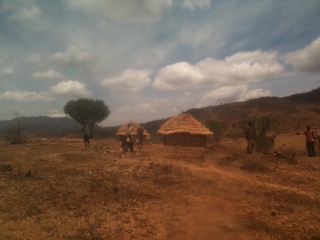
 Our huts in Lotim


The KKAB team had a chance to visit Lotim just before Simon and Carina Gruber left. Unfortunately, Miriam and Melissa didn't join as our poultry project had an outbreak of Infectious Coryza and 100% was affected. Dr Jean and Melissa (an Australian vet student with us til Dec) tested for avian flu and Newcastles Disease and got the flock started on meds while Miriam and the chick-chicks moved the hens and thouroughly cleaned the hen house. Mukisa brought meds the next day and all survived.

meanwhile -in Lotim, Tom commissioned 4 huts to be built atop Lotim ridge (see pix above), the walls still need to be mudded and doors fitted. none-the-less, we slept inside them after sitting around a camp-fire that Simon built. we've had 2 good months with the Grubers and will truely miss them as they return to Germany to pray over their next step. They came to survey the land and the team and seek God's will if they should join our ministry. Pray for clarity for them and unity for us. We'd love to have them join us!

Friday, April 6, 2012

Using latrines is a taboo in Karamoja


By Joseph Orisa
It is a taboo to use latrines in Karamoja and any leader who talks about latrines risks being rejected by the people, Mark Namuya Lochieng, the assistant chief administrative officer, Kotido, has said.
Namuya disclosed this during the recent celebrations to mark World Water Day held in Kotido. Kotido is one of the districts that make up Karamoja sub-region. Others are Nakapiripirit, Kaabong, Moroto, and Abim.
During the same function the district health inspector, Godfrey Ocheng Malanda revealed that over 75% of Kotido district leaders do not have latrines in their homes. The leaders include councillors, members of parliament and civil servants. Malanda said a survey done throughout Kotido district during the sanitation week found that 90% of the people ease themselves in the bush.
“Even the few latrines in the communities are just there for formality; they are not being used,” Namuya said.
Residents expressed mixed feelings over the use of latrines. Albina Napii, a resident of Rengen sub-county, said she could not use a latrine because it makes women barren.
She also said many women who had shared toilets with their in-laws had allegedly gone blind.
However, Mercellina Anyango, a resident of Panyagara sub-county said she did not have a pit latrine because it is expensive to dig.
Facts about Karamoja
1. The region of Karamoja covers over 27,900 square kilometres.
2. The region is mostly semi-arid with harsh climate and low annual rainfall.
3. It is largely savannah, covered with seasonal grasses, thorned plants and occasional small trees.
The large mountains; Mt. Kadam, Mt. Napak, and Mt. Moroto — lying on the periphery of Karamoja have peaks reaching around 3,000 metres (10,000 feet) and higher.
4. Karamoja depends on cattle, mining and trading in agricultural produce with neighbouring districts.
5. The Karimojong have been armed for the past 20 years and use the guns in interclan and cross-border cattle rustling raids. 
Traditionally, young Karamoja men need cattle to pay bride price. So they often raid and grab cattle from the neighbouring clans.

Friday, March 2, 2012

construction

We have (God willing) a volunteer team coming this Spring to help us finish our last building project: the KACHEP meeting room. We’ve already dug the foundation trenches (hired them to be dug) and we’ve bought and placed the twisted rebar. Now we’re waiting for a truckload of cement to arrive from Mbale and pour cement.  The soil around the one meter foundation whole has an ever-growing crack so we really need to get it poured before it collapses with the rains that have started. When the team comes, we can lay stone and (hopefully) finish it – it will be 8 meters (external) from end to end, oval, like the ‘stone house’ with half-walls all around except for one end with a storeroom (taking 2 m from the internal measure – thus, 5 m from end to storeroom door) – the exciting thing about this is (drum roll), we’re doing it all ourselves – pray long and hard
Tom